Reflections of the Unseen

When you’re out on the city streets it pays to be attentive. But to what?  You couldn’t possibly get around while hearing every sound, smelling every smell, seeing everything.  You’ve got to be selective. There are a lot of distractions. Everybody and everything wants to be noticed.

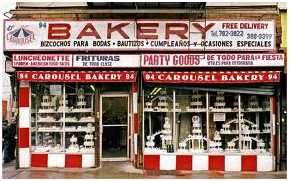
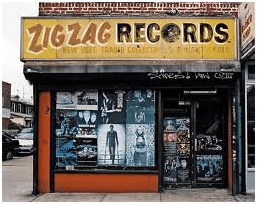
 Shopkeepers put a lot of effort into displaying their merchandise in a way that says, ‘Hey! – Buy me!”.

  Like these:


 (photos by James T. and Karla L. Murray, from their book Storefront)

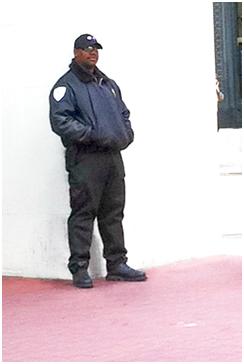
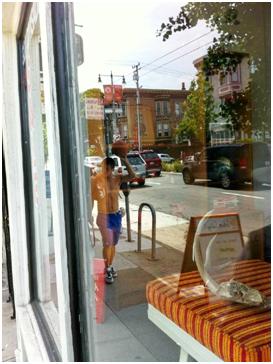
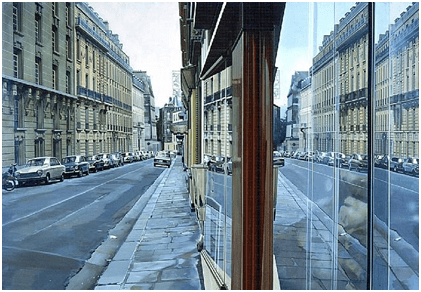
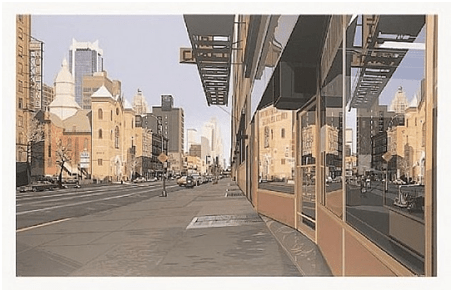
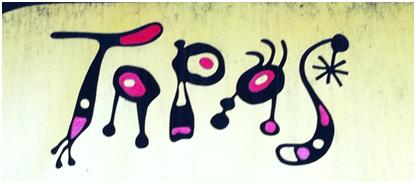
But if you’re not distracted you can see a whole parallel world. A two dimensional world between you and the 3D one.


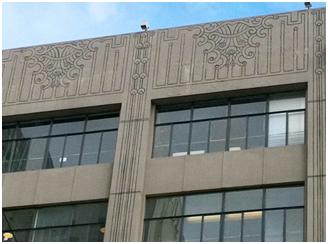
I never paid much attention to this world before checking out the work of the painter Richard Estes.


He

  • photographs street scenes
  • then uses the photos as the basis for huge paintings. 
  • These paintings of photographs get photographed again
  • and printed in books.

And now I’ve scanned some and they’ve scrambled into bytes and landed as pixels for you to see on a computer screen.

Look for them on the street.

City of Tomorrow

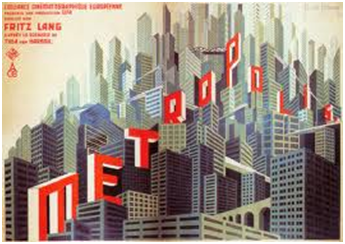
If you take a moment to think about the city of the future you might picture some Flash Gordon fantasy, Fritz Lang’s Metropolis or the Jetsons. Or Blade Runner-era LA.

They’re good settings for nightmares, the Cities of Tomorrow, from Brasilia to Metropolis to Corbusier’s slabs.


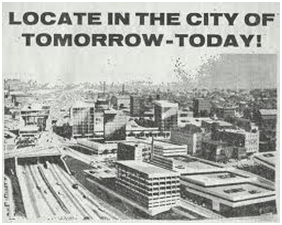
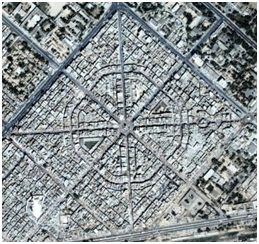
Corbusier’s dream            Redevelopment


But it’s hard enough to picture the city of today, much less tomorrow’s.

For most people in cities, it’s not like the romantic favorites of New York, Paris, or London or even the golden oldies of Jerusalem, Rome or Cairo.


For many of these new urbanists, the reality looks more like this, a town of shacks, called favelas, in Sao Paulo, Brasil.

It’s worthwhile to wonder about the City of Tomorrow because by 2030 60% of the world – almost 5 billion people – will live in cities – double what it is today. At the beginning of the 20th century, 220 million people lived in cities. At the end of the century 2.8 billion did.

(These figures are from the United Nations)

Here are some of the biggest cities in the world. I picked these because I’d never heard of any of them:

Dalian, China Population: 6.5 million

Dhaka, Bangladesh Population: 11 million

Fortaleza, Brazil Population: 3 million

Kano, Nigeria Population: 2.8 million

Belo Horizonte, Brazil Population: 4.16 million

Faisalabad, Pakistan Population: 3.2 million

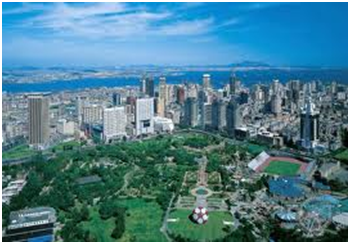
Turns out the City of Tomorrow is probably in Korea. It’s Songdo:

  • Its 1500 acres are 40% parks and canals and it has a residential density of Manhattan.
  • The City will have the carbon footprint of a city a third of its size.
  • Water and waste are recycled: rainwater and grey water are collected for cooling and irrigation, solid waste is burned for heat and electricity.
  • The goal is to use 30% less water than a city its size and to save 75% of the trash from landfill.
  • Of course the buildings have solar panels on the roof, and sod too. The windows are of special glass and the concrete uses 20% less cement.
  • Thanks to Cisco it is the most wired city in the world.
  • When the first 2,200 apartments went on the market in 2005 there were 170,000 applications.

The developer has plans for 20 more versions of Songdo in China, India, Saudi Arabia, and Qatar.

Here are an article and a video about Songdo.

(I began thinking about these questions after I moderated a conversation with Greg Lindsay, author of Aerotropolis, at the World Affairs Council. The conversation was called “Rethinking the Future of Cities” and you can listen to the podcast here: http://wacsf.vportal.net/). You can buy his book at Amazon.)
NOSTALGIA CITY

San Francisco feels like a stage set or a city in a dream.

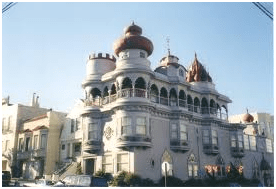
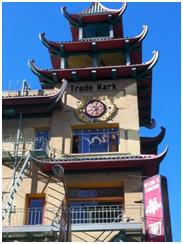
Nostalgic for a make-believe city, we built one. You can walk down the street and see a Venetian Palazzo, a Gothic Cathedral, a brand new Victorian, a Chinese pagoda, and a bank disguised as a Roman temple.

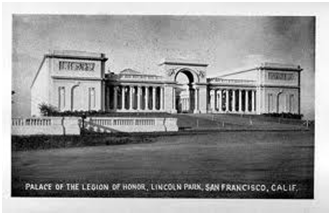
We’ve even got copies of copies of Greek temples:


Paris                            San Francisco

We’ve got banks that look like ancient Rome:


All over town, otherwise modest houses strut their columns:


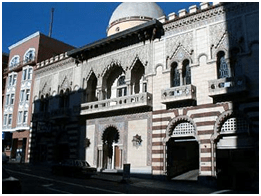
We’ve got Moorish Revival:


And some kind of Indian Revival:


Even those buildings in Chinatown are sets – the pagodas and temple roofs were grafted on after the 1906 earthquake to attract tourists.


And we’ve got Mission Revival and what I call Flintstones Revival:


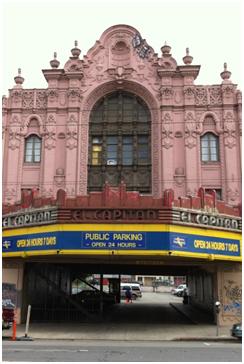
Even our parking lots can be Spanish Revival:


But my favorite’s got to be Mayan Revival.

It can be just a little bit, on the top:


Or over the door:


In the Mission, it’s strictly do it yourself:


Or it can be totally over the top:


No human sacrifices here. But plenty of pain. 450 Sutter Street, by the great San Francisco architect Timothy Pflueger, houses probably half the dentists in the city.

San Franciscans wear the costumes of 50’s beatniks or 60’s hippies or Goths. How much better if we matched the buildings with Mayan and Roman tunics, pirate outfits, mandarin robes, and Victorian gowns.


From Sewers to Starchitecture: Glamour and its opposite

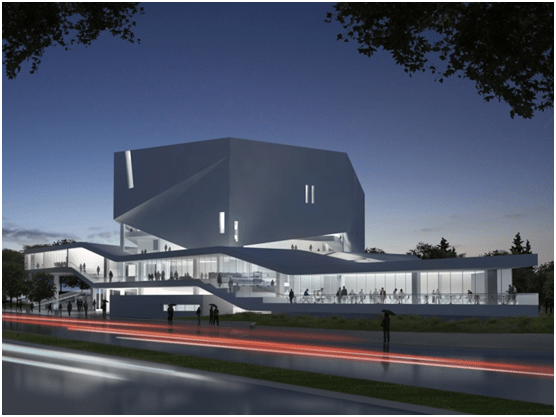
The scene: the unveiling of the conceptual design for the new Creative Arts Building at San Francisco State University. Waiters passed around wine and hors d’oeuvres, there was a pianist and everyone was dressed up. The architect, dressed in black with shiny black boots and a shaved head, talked about Architecture.


Courtesy Michael Maltzan Architecture

We all got to see the model.


Courtesy Michael Maltzan Architecture


It really is a sexy building.

I was invited because I played a key role on the project: I got the utility pipes moved to accommodate the building.

It took two years and we needed permission from

  • the Department of Public Works;
  • Public Utilities Commission staff (and Commission);
  • Planning Department;
  • City committees with acronyms like CULCOP and TASC;
  • City Attorney’s Office;
  • Department of Real Estate;
  • a title company and an appraiser;
  • two Board of Supervisor Committee hearings;
  • And four votes by the full Board of Supervisors.

Here’s what we did:


Okay, it’s not much to look at.


The building was designed by an architect named Michael Maltzan from Los Angeles, but probably it was designed by a half dozen anonymous architects in his office. Plus hundreds of mechanical engineers and structural engineers and lighting people and geotechnical engineers and landscape architects. And campus planners and the people who put together the bond issue to pay for it and the voters who voted for it. And Mr. Mashouf who made an enormously generous contribution to get it started and the fund raisers who asked him for the gift. And the people who made the stuff that gets put together into the shape of a building and then the people who put it together.

We make a mistake when we think a building is “by” the architect in the way a painting is by an artist.


A Jackson Pollock really is by Jackson Pollock.


We take for granted all those pipes and wires which bring us water, take water away, heat our coffee, bring the juice to our lightbulbs and the pictures to our televisions. If they weren’t where they should be we’d look for someone to blame. But they do work, so next time you take a cold drink from your fridge drink a toast, please, to the armies of people who made it possible.

One and a Half Parking Lot Booths

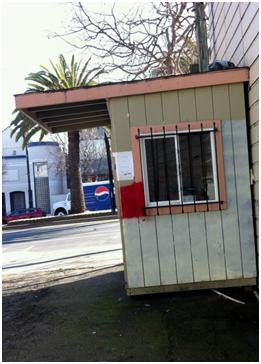
If it’s parking lot booths you’re after, San Francisco’s Market Street isn’t a great place to look. On the whole length of the street, I only found one and a half.

There are a handful of places to park. But few have booths.


If you’re staying at the Travelodge at Market and Valencia there’s a spot for you.


Sometimes the booths have lots of personality. And although they invite graffiti, they can also host street art.


This piece, just half a block off Market Street, seems to be by the British artist Banksy (http://www.banksy.co.uk/).

There’s something poignant about parking lot booths. They’re a dying piece of the urban landscape. There’s really no reason any longer for parking lots to have human concierges.


A machine can do the job.


And the lots themselves are mostly doomed. They need to be in places where people want to go – to shop or eat or visit. But nobody wants to just go to a parking lot. So the popularity of their neighbors creates the pressure to get rid of them. One by one they disappear and with them their booths.

I got rid of one myself, though there wasn’t a booth: just parking meters. Now on the site there’s a grocery store, library, and housing (see my article for the Urbanist Magazine: How to Turn a Parking Lot into Apartments, a library, and a Grocery Store the Hard Way: http://74.200.72.136/publications/library/article/howtoturnaparkinglointoapartments05012004).

The whole length of Market Street there are only one and a half booths.


This one has a sign to say that it’s lost its lease.


Farther up Market, this half booth.

It’s only there on weekends, in the parking lot of Sullivan’s Funeral Home. Weekdays it gets rolled away. The clients aren’t grieving friends and relatives; they’re kids going clubbing.


It measures only 2.25 feet by 5 feet. The attendant’s review:

“It’s got my desk. It’s got my television. It works for me.”

A SIGNIFICANT IMPACT: RUNNING FENCE

“[It is] one of the most marvelous books of contemporary art in the 20th Century. There are many works of art in the 20th Century, and I am an artist and I project only the work of art. These 280 pages are a work of art, with the nature, with the people, with the traffic, with the birds, with the ocean, and with the sky.”

Christo

You probably know Christo as the artist who (in collaboration with his wife, Jeanne-Claude) hung The Gates in Central Park -after 25 years of public review. They wrapped the Reichstag in Berlin and the Pont Neuf in Paris. For two weeks in 1975, he ran a fabric fence through Marin and Sonoma, from Highway 101 into the sea.

The book he’s reviewing above is the “Final Environmental Impact Report, Running Fence” by Environmental Science Associates. In two volumes the EIR describes the Fence and what it might do to the environment. It lays out impacts on archeology, traffic, air quality, energy use, soils, water, noise, and wildlife.

The Fence is described in the EIR as

“18 feet high and more than 24 miles long. The structure would be essentially an assembly of 18-foot by 62- foot white nylon panels, supported by cables and poles, the latter anchored in soil or rock.”


In reality, there were two aspects of the work.

Obviously, there was the material object, which Christo, in the EIR, describes like this:

“The physical reality of the Running Fence will be a beautiful one. The fabric is a fragile material, like clothing or skin. And, like the structures the nomads built in the desert, it will have the special beauty of impermanence. The fabric is a light-conductor for the sunlight, and it will give shape to the wind. It will go over the hills and into the sea, like a ribbon of light.”


The other part, also described by Christo:

“Three years of teamwork, three years of study with engineers, surveyors, botanists, geologists. The Running Fence project also involves politicians and businessmen, supervisors and artists, students and – especially – the local ranchers and landowners.”

Running Fence was fiercely debated and this debate was an important part of the art work.

Pro: “Running Fence will depict the evolution of man from the sea, his enormous efforts to survive and build on the land, and the ultimate destruction of that for which he has strived with such intensity for so very long.”

Con: “It will bring tourists into the county and make it a crummy Coney Island.”

  •  

Those of us involved in planning and development usually view this process as an unfortunate series of steps on the way to a building or a plan. But there is an art to it and theatre too.

The Running Fence Environmental Impact Report is also an important part of the work.

I looked for a long time for a copy of the Report and found only one: for $750, listed by an antiquarian bookseller in La Jolla. But I got a copy, and you can too, by downloading it from the Smithsonian’s website, at

http://americanart.si.edu/exhibitions/online/runningfence/eir.pdf


17 FONTS ON 16TH STREET

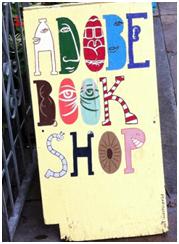
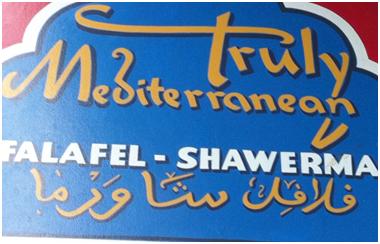
On the six block stretch of 16th Street between Mission and Market Streets there’s a font for every taste: wacky, retro, vintage, homemade, Hebrew and Arabic, clean and funky. They tell us all we need to know about the attitude of the enterprises.

These photos were taken with an iphone and hooked up with an app called What the Font, which pretends to read a picture and guess the font. The guesses seem pretty random, but I like the names.

Check these out:


Rhodaelian Ligatures


Farnham Display Bold


CC Sticky Fingers Italic


Mordings


Geodec Fog


Euphonia Roman


Viscosity Regular


Churchward Samoa Bold


Lithia Off Kilter


Baby Mine Fat


Sailors Tattoo Pro Xmas


Mostra Nuova


CAKink


Lady Starlight


Foldron Italic


Gendouki


Minimala-Medium Italic

Saul Steinberg: Dottore in Architettura


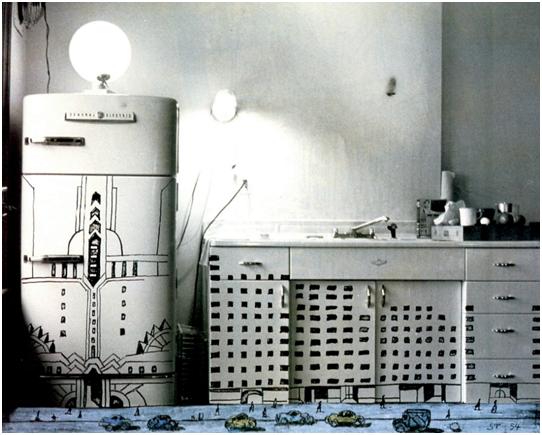
Kitchen Street, 1954

Colored pencil, gouache, and ink on photograph, 11 x 14″Private collection© The Saul Steinberg Foundation/Artists Rights Society (ARS), New York

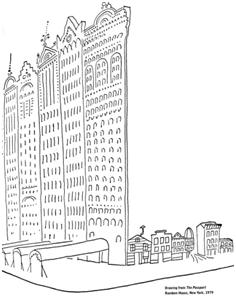
There are a lot of architecture critics out there. Just about everybody is one. Some of the best, like Saul Steinberg, never designed a building.

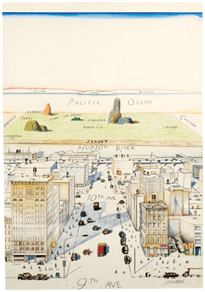
If you know of Saul Steinberg (1914-1999), it’s most likely for his iconic View of the World from 9th Avenue.


Saul Steinberg, View of the World from 9th Avenue, 1976

Ink, pencil, colored pencil, and watercolor on paper, 28 x 19 in. (71.1 x 48.3 cm) Private collection Cover drawing for The New Yorker, March 29, 1976 © The Saul Steinberg Foundation/Artists Rights Society (ARS), New York

It’s a shame that most people who’ve heard of Steinberg are familiar with only this image.

My favorite works of his deal with buildings, towns, and cities.

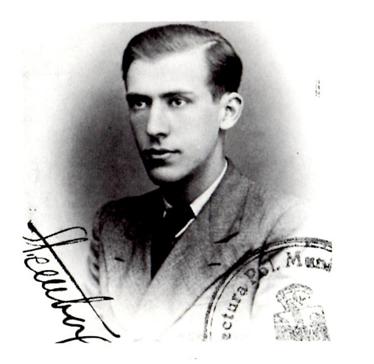
He graduated as Dottore in Architettura from the Milan Politecnico in 1940 but as a Jew he was not allowed to practice.


Anyway, he said “The study of architecture is a marvelous training for anything but architecture.”


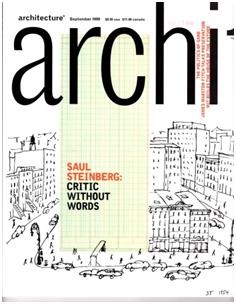
Architecture Magazine did a cover story on Steinberg after his death and here is some of what Peter Blake wrote:

“Almost everything that has been said and written about architecture during the past forty years was said much better, much more clearly, much more amusingly, much more incisively and much earlier by this extraordinary artist, and without the use of a single word…Saul was by far the most brilliant architecture critic in the United States in the past half century…When Saul wanted to tell you that a building looked silly, he would draw it to look silly. When he wanted to tell you that a building looked sexy, he would make it look sexy. When he wanted to make it look “postmodern” he would make it look goofy.

He never built any of his architectural projects, alas, but everyone else did – whether they realized it or not.”


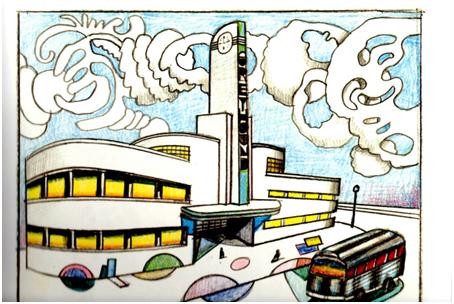
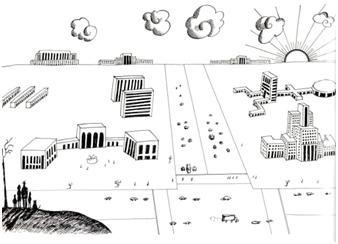
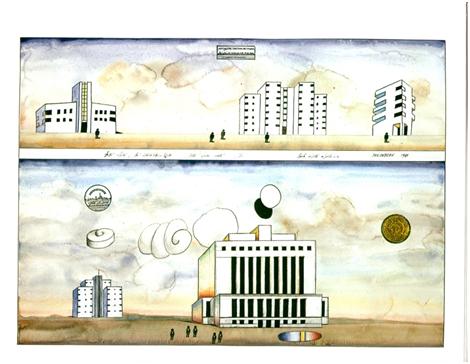
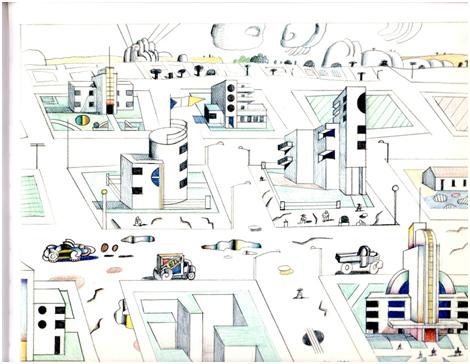
Check out some of his buildings:


Cincinatti Greyhound, c. 1980Pencil and colored pencil on paper, 10 ¾ x 14 in.Private collection© The Saul Steinberg Foundation/Artists Rights Society (ARS), New York


Untitled, c. 1970 Ink on paper© The Saul Steinberg Foundation/Artists Rights Society (ARS), New York


Seattle Projects, 1981Watercolor, ink, colored pencil and foil on paper, 22 x 30″Private collection © The Saul Steinberg Foundation/Artists Rights Society (ARS), New York


Untitled, 1951-52

Ink on paper Originally published in The New Yorker, January 26, 1952 © The Saul Steinberg Foundation/Artists Rights Society (ARS), New York

Bauhaus Street, 1982

Ink, pencil, and colored pencil on paper, 19 ½ x 25″ Private collection © The Saul Steinberg Foundation/Artists Rights Society (ARS), New York

Thank you to the Saul Steinberg Foundation for kind permission to show these to you.


Four ways to look at skyscrapers

.

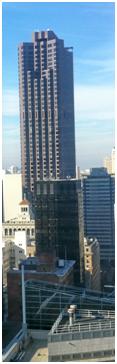
1.Head on.

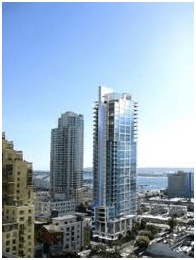
This morning I was in a meeting in a conference room on the 30th floor of a high rise office building downtown, looking out at the Bank of America building, the tallest building in San Francisco. It looked different.


In fact, it looked pretty good, tall and slender and elegant. It was as if I’d never seen it. I realized it looked so good because I was seeing it, for the first time, head on.

But when do you get to see a building head on? You have to be up in the air yourself or way far away.

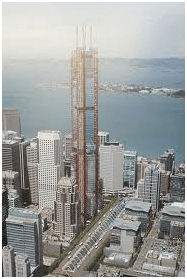
2.From above.


Why is this view so popular? I don’t get it. Hardly anybody ever sees buildings like this.

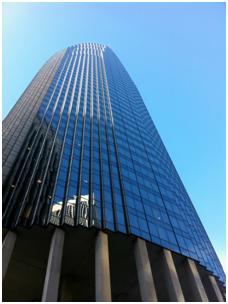
3.How we really see them.


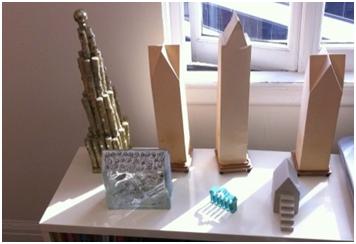
4. On a table.


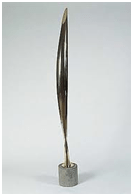
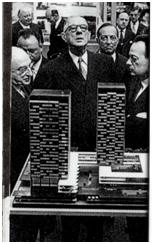
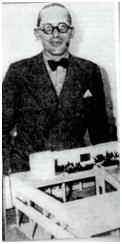
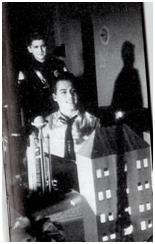
Everybody likes to look at building models. But they make a high rise look like a Brancusi sculpture.


Here are some other fans (identities listed at the end):


Donald Trump

Adolph Hitler

Charles de Gaulle

Le Corbusier

Johnny Depp


Divided Cities

On a Saturday afternoon this summer, I walked from West Jerusalem to East Jerusalem. West Jerusalem was a ghost town, everyone celebrating the Sabbath with their families: no cars, few pedestrians, shops and restaurants closed. Buses don’t run. Really, it was spooky. You cross a street and come to East Jerusalem: a bustling city with teeming crowds, shops spilling out onto the sidewalks, traffic jams. There’s no wall or sign, but suddenly it’s a different world.

Jerusalem is a divided city within a divided country (or two countries, depending on who you ask) and there’s even a divided city within it: the Old City, which has four quarters; the Jewish Quarter, the Christian Quarter, the Moslem Quarter, and the Armenian Quarter.


A week later we were in Berlin, which of course did have a wall, and where hundreds of people were shot trying to get from East to West. Today, twenty years after the wall came down, the city is seamless. When they merged, the East lost its identity, except for the Ampleman, the beloved traffic crossing figure which they fought to save.


There are “Places Where People Like Me Live” and “Places Where People Who Aren’t Like Me Live”.

There are places where we go and where we don’t, as shown on this fold-out map of Paris. The colors show “where I go” and ‘where I don’t go” (“J’y vais, J’y vais pas.”)


You don’t have to travel far to find a divided city. Check out these beautiful but sad maps, produced by Eric Fischer, showing the racial distribution of US cities (White population shown in red, Black population shown in blue):


San Francisco Bay Area


New York Metropolitan Area


Detroit


Atlanta


Chicago


New Orleans