The Street I Live On

The street I live on is only two blocks long, lined with Victorian houses.  It’s in about the geographic center of San Francisco,  There are street trees and front yards (unusual for San Francisco) and in the spring it smells of Jasmine.  The neighbors are a mix of old-timers and gentry, gay and not, with lots of kids.  Across the street, three households have joined their backyards so the kids have more play space.

Every year there’s a block party and some of the guys on the block play in a band.  A neighbor supplies beer he makes in his garage.

We even have an e-newsletter.  We let each other know of the need for volunteers for the street fair, about our current crime wave, and referrals for tree trimmers or handymen.

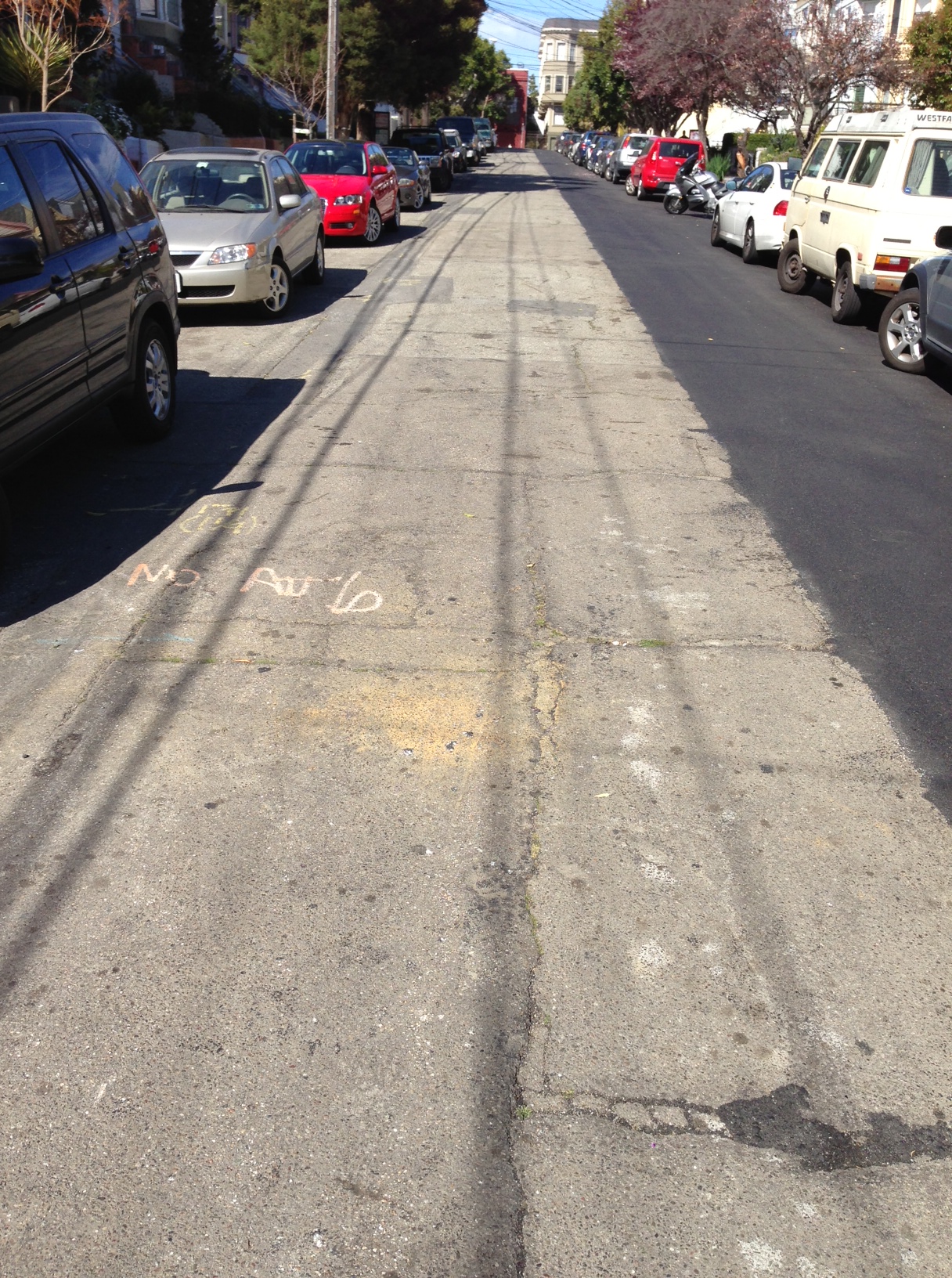
Lately the big topic has been the street itself. The City recently dug up a trench to replace the century-old water pipes.  Then they graded and laid asphalt down half the surface.

h street

Some of the neighbors are upset that only half the street was repaved.

From the newsletter, emails, and Facebook:

  • It’s the City of San Francisco that is to blame for this total balls up of a result.
  • Never heard of such a thing. Bizarre. God bless government.
  • The new paving looks ridiculous.
  • It’s this kind of bureaucratic SNAFU that makes no sense. Could no one even conceive of the whole picture?
  • I am speechless, this is the worst repaving work I have ever seen.
  • You don’t see 1/2 the streets paved in Pacific Heights or the Marina!

Our local representative wrote back that the other half will be paved. So maybe it’s temporary.

Honestly, in the 20 years I’ve lived on this block I never paid any attention to the surface of the street.  Until now.

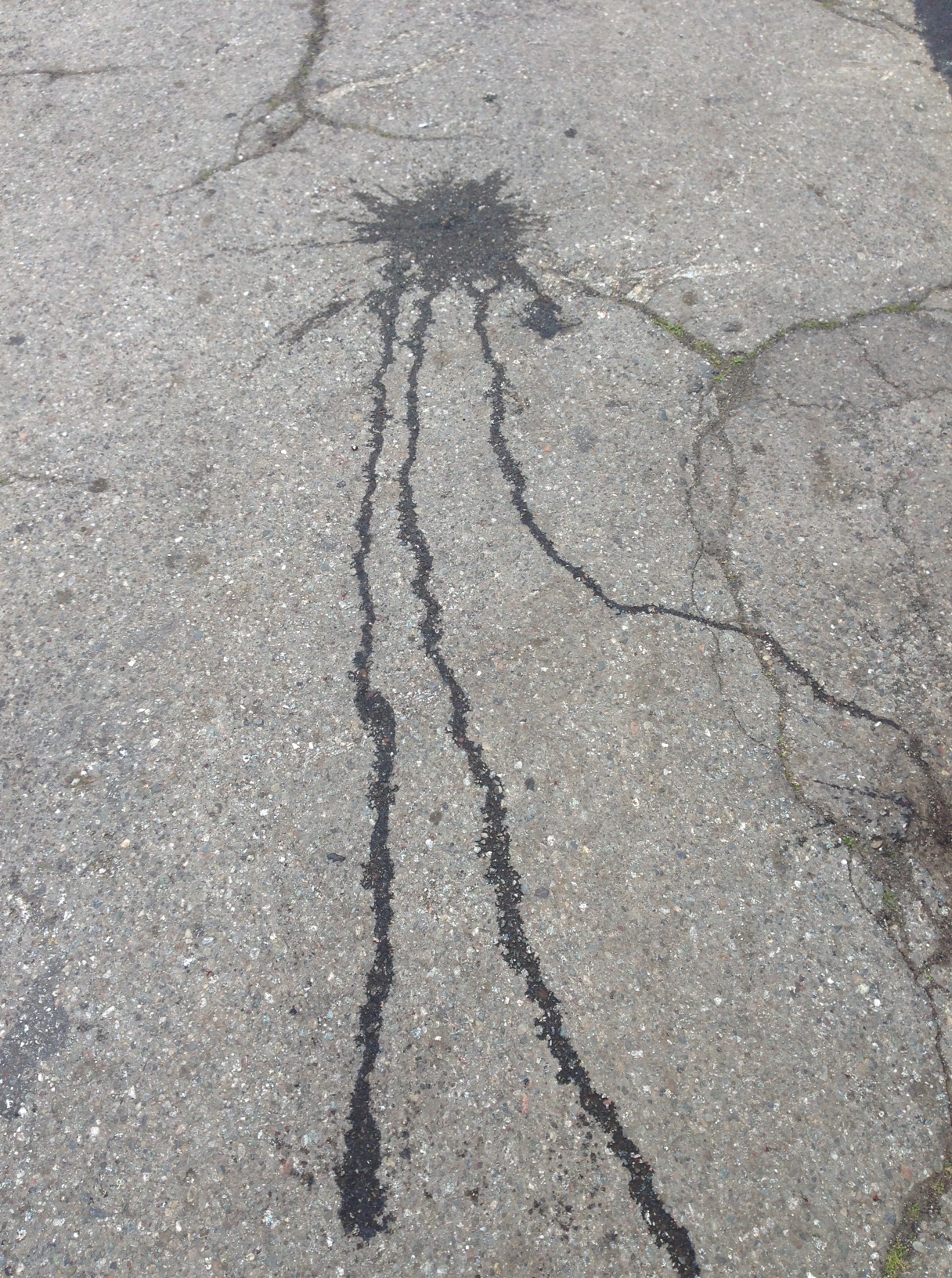
street splat1

It’s got some great splats.

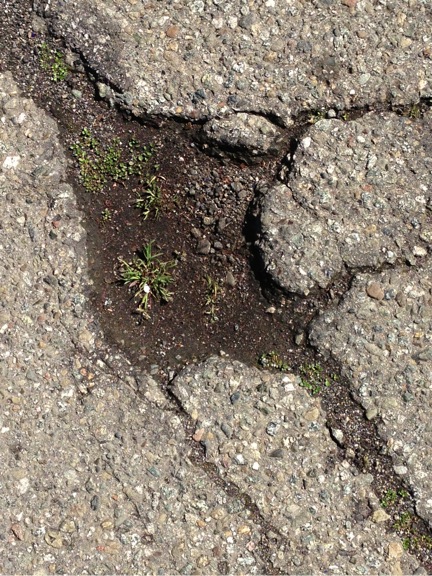
street plants

Plants can survive.  Amazing.

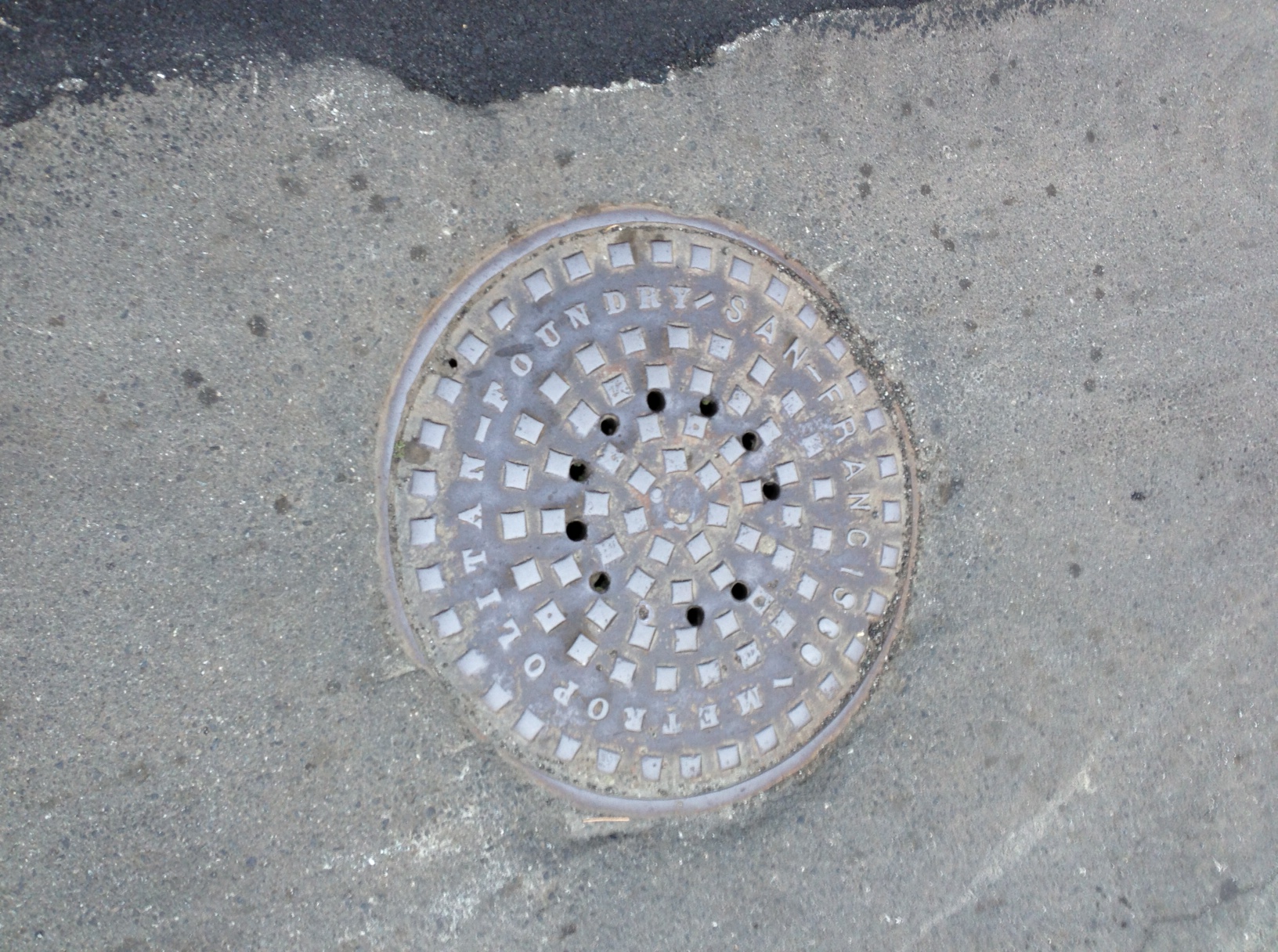
manhole 2

Something’s under there.

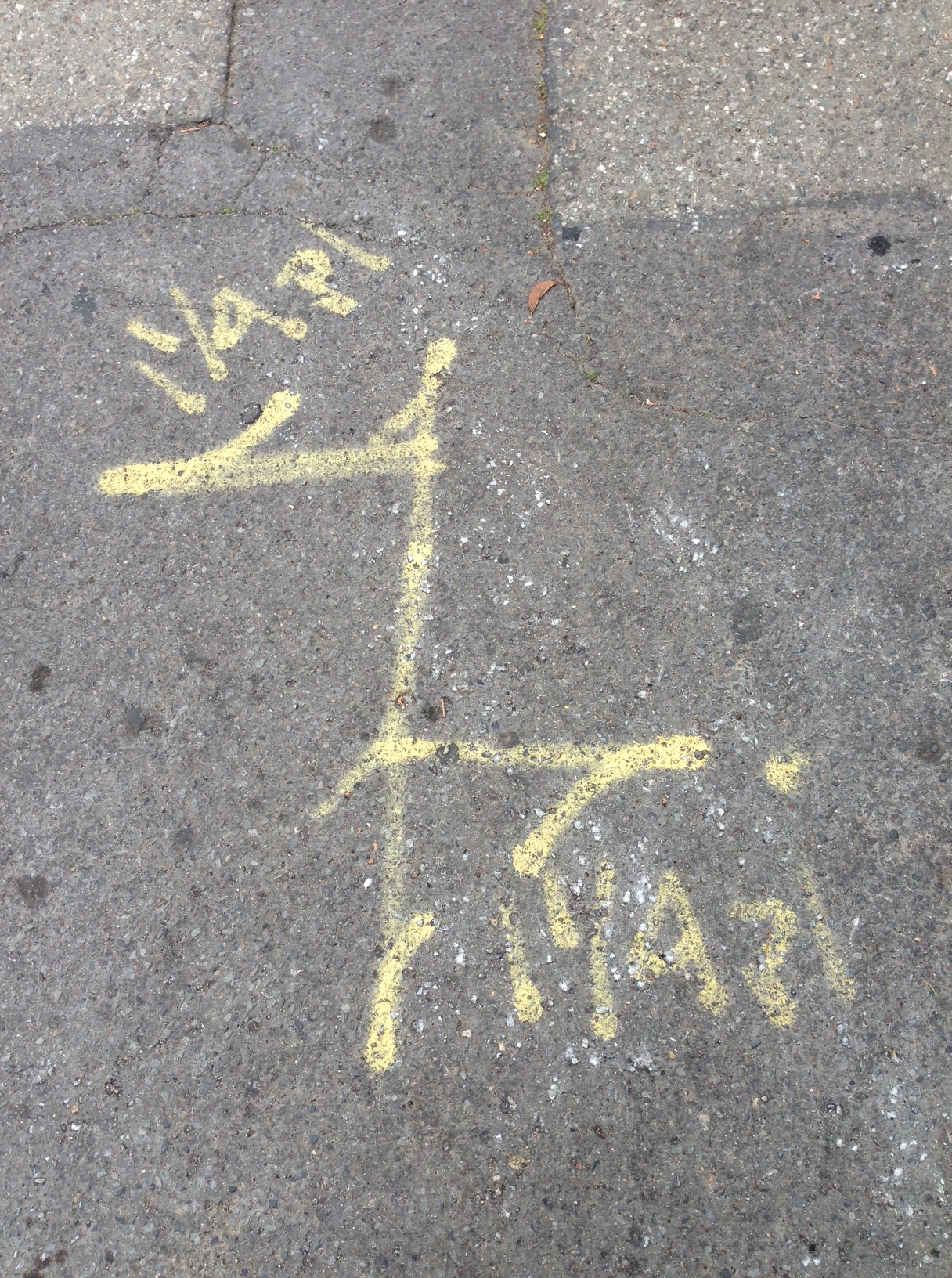
street text2

There is cryptic text.

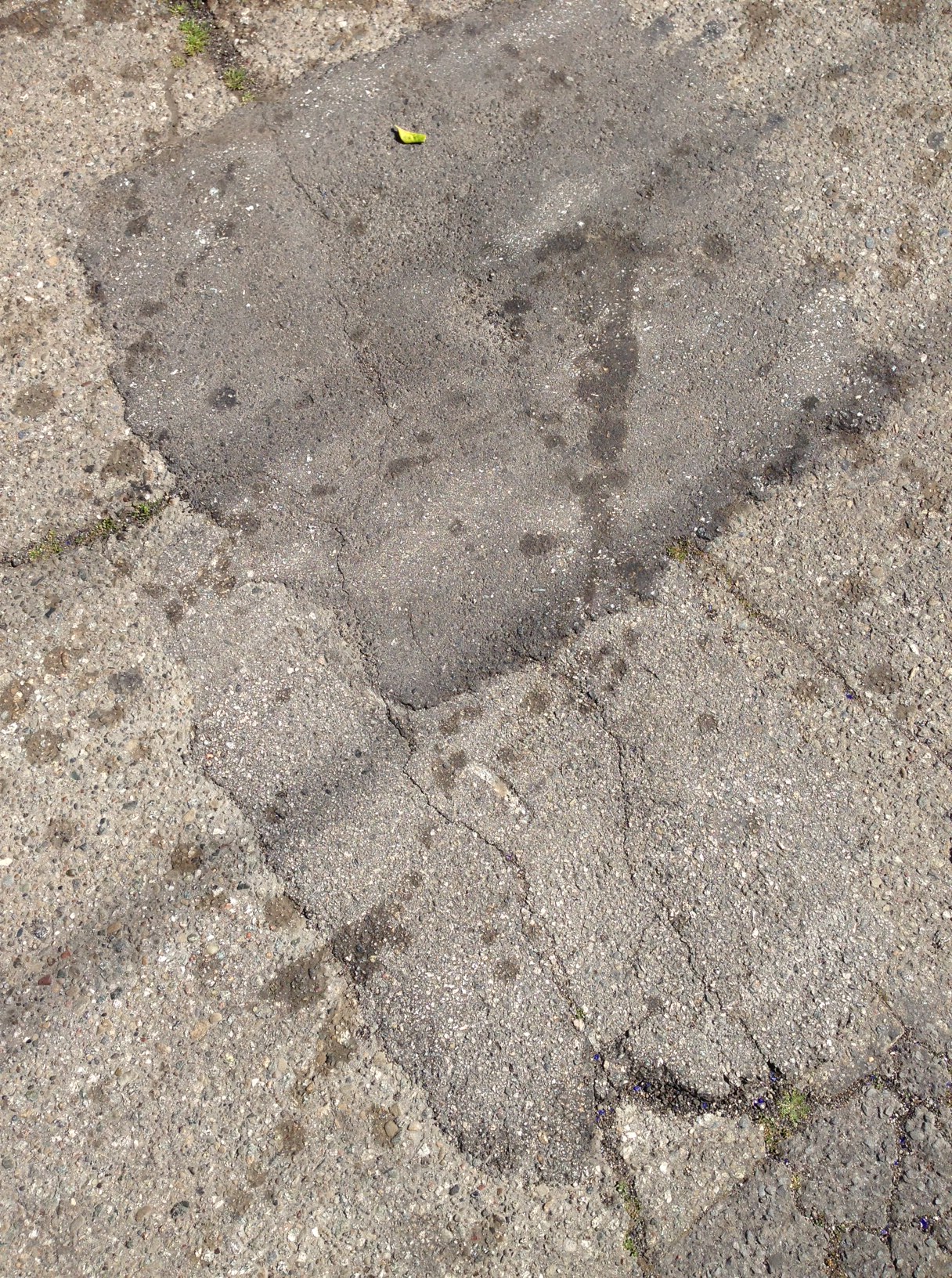
patched

It’s patched.

I love my street.  But this isn’t about the geography or the architecture or the landscaping or the people of my street.  It’s about the street: pitted, scarred, faded, pocked, scratched and patched.

And yours?  Take a look.

The Cities Where Things Are Born

Your sneakers.

The plastic spoon that came with your soup.

The zipper in your pants.

All the stuff at the dollar store.

Your smartphone.

Just about everything advertised in magazines.

What do they have in common?

landfill

They are yours only on their way to the landfill.

And they were almost certainly made in China. There, they make the products we buy – but first they make the cities that make them.

Sonaxia City makes 350 million umbrellas a year.

1/3 of the world’s socks are made in Datang.

Chenghai is the City of Toys, with more than 5,000 factories.

40% of the world’s neckties are from Shengzou and 70% of the world’s cigarette lighters are born in Wenzhou.

Buttons: Qiaotou.
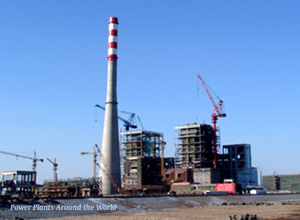
wangtan

These factory towns sprout pretty fast.

Here, a description from National Geographic:

“At 2:30 in the afternoon, the bosses began designing the factory. The three-story building they had rented was perfectly empty: white walls, bare floors, a front door without a lock.

On the first floor, we were joined by a contractor and his assistant. There was no architect, no draftsman; nobody had brought a ruler or a plumb line. Instead, Boss Gao began by handing out 555-brand cigarettes. He was 33 years old, with a sharp crewcut and a nervous air that intensified whenever his uncle was around. After everybody lit up, the young man reached into his shoulder bag for a pen and a scrap of paper.

First, he sketched the room’s exterior walls. Then he started designing; every pen stroke represented a wall to be installed, and the factory began to take shape before our eyes. He drew two lines in the southwest corner: a future machine room. Next to that, a chemist’s laboratory, followed by a storeroom and a secondary machine room. Boss Wang, the uncle, studied the page and said, “We don’t need this room.”

They conferred and then scratched it out. In 27 minutes, they had finished designing the ground floor, and we went upstairs. More cigarettes. Boss Gao flipped over the paper.

“This is too small for an office.”

“Put the wall here instead. That’s big enough.”

“Can you build another wall here?”

In 23 minutes, they designed an office, a hallway, and three living rooms for factory managers. On the top floor, the workers’ dormitories required another 14 minutes. All told, they had mapped out a 21,500-square-foot (2,000 square meters) factory, from bottom to top, in one hour and four minutes.”

Three months later the factory was producing bras.

Here are the photos from the article:  http://ngm.nationalgeographic.com/2007/06/instant-cities/leong-photography

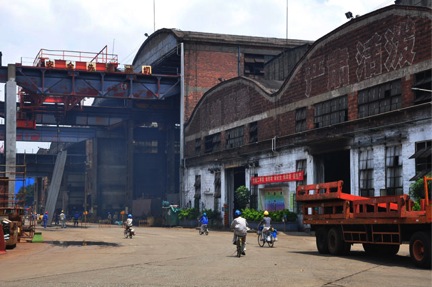
These factories are cities, with hospitals, schools, huge dormitories, internet cafes, banks, TV stations, and fire departments. Foxconn City, the Taiwanese-owned facility where iphones are cranked out, has 420,000 workers. It’s in Shenzen, which grew from a fishing village of 280,000 to a city of 14 million in 30 years. Shenzen is in the Pearl River Delta, established as an anything-goes trade district in 1980. The Delta has 200,000 factories. With the loosening of trade, foreign investment, and mobility regulations, 30 million rural Chinese picked up and moved to these factory cities.

fac

Now, escalating land prices, increasing environmental protection, and increasing competition from India, Indonesia, Vietnam, and other regions within China have led to abandonment.
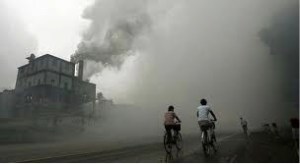
china polluted factory

According to “Factory Towns of South China, an Illustrated Guidebook”:

“The 2008 financial crisis saw a hollowing out of 600,000 workers from the Pearl River Delta at one stage. Smaller towns formed with more than 75% of migrant worker residents would be transformed into ghost towns overnight… One factory owner even imagined his factory to sit on a boat, so that it could sail from country to country depending on minimum wage fluctuations. ”

These cities are like the products they make: cheap and disposable.

Let’s go back and visit that bra factory:

“The former Yashun factory was unlocked. Inside, bra rings were strewed everywhere— bent rings, dirty rings, broken rings. There were crumpled cigarette packages and used rolls of tape. An empty diaper bag. A wall calendar frozen at November 22. A good luck charm with Mao Zedong’s face on one side and a bodhisattva on the other. And throughout the dormitories, on the white plaster walls, graffiti had accumulated over the months. Next to his bed, one worker had listed numbers: winning lottery combinations.”

Modern Design: The kind you don’t bring home to mother

Who doesn’t like to look at modern design – the sleek lines, the irony, the minimalist clarity.  So cool.  So clean. What Tom Wolfe, in his book From Bauhaus to Our House, called

“ the whiteness & lightness & leanness & cleanness & bareness & sparseness of it all”.

But we have a love/hate relationship with it.

My late Uncle Stanley was an architect and he lived in a modern apartment house in Manhattan. My Aunt Doris and my grandmother lived in the same building. And so did Marcel Breuer; so you know it was modern.  Modern as it was, you’d go up the elevator past the wallpaper of birds and flowers into my grandmother’s Victorian parlor.

Here’s a house my uncle designed in 1960 in Cincinnati.   Image

It was even reviewed in Domus, the Italian design and architecture magazine.

Here’s what Lynn Gordon, who grew up in the place, wrote:

 “If modernism = minimalism and simplicity, then family = clutter and entropy.”

Her article is entitled, “What Was Dad Thinking?”

Image

“The living room with its cork floor was off-limits for play.”

Many modern homes aren’t really…. domestic. They’re “machines for living”. But who wants to live in a machine?

Image

I remember a dinner party at the home of local modernist architect where the living room was like a doctor’s waiting room.  In East Germany.

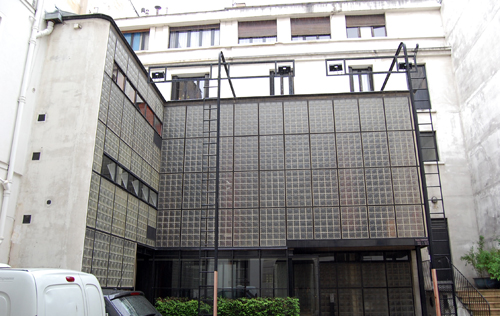
An icon of modern architecture is La Maison de Verre, The House of Glass, in Paris by Pierre Chareau.

Image

We visited once and met the girl who lived in the house, a descendent of the gynecologist who had commissioned it. She was jumping rope in the courtyard.  In French we asked what it’s like to live there and in French she answered:  “C’est triste”.  “It’s sad”.

For a great source of miserable looking modern design victims, you can’t do any better than the website Unhappy Hipsters  and their book, It’s Lonely in the Modern World. Their team captions photos from Dwell and other design magazines. In their impeccable homes, they all look triste.

Image

Pensive glances. Effortless ennui. It all takes practice.(Photo: Andrew Meredith; Dwell)

Sure, these places look beautiful.  But as Rick James sang, they’re not the kind you take home to mother.

 Image

SHE’S A VERY FREAKY GIRL.Image

THE KIND YOU DON’T BRING HOME TO MOTHER.

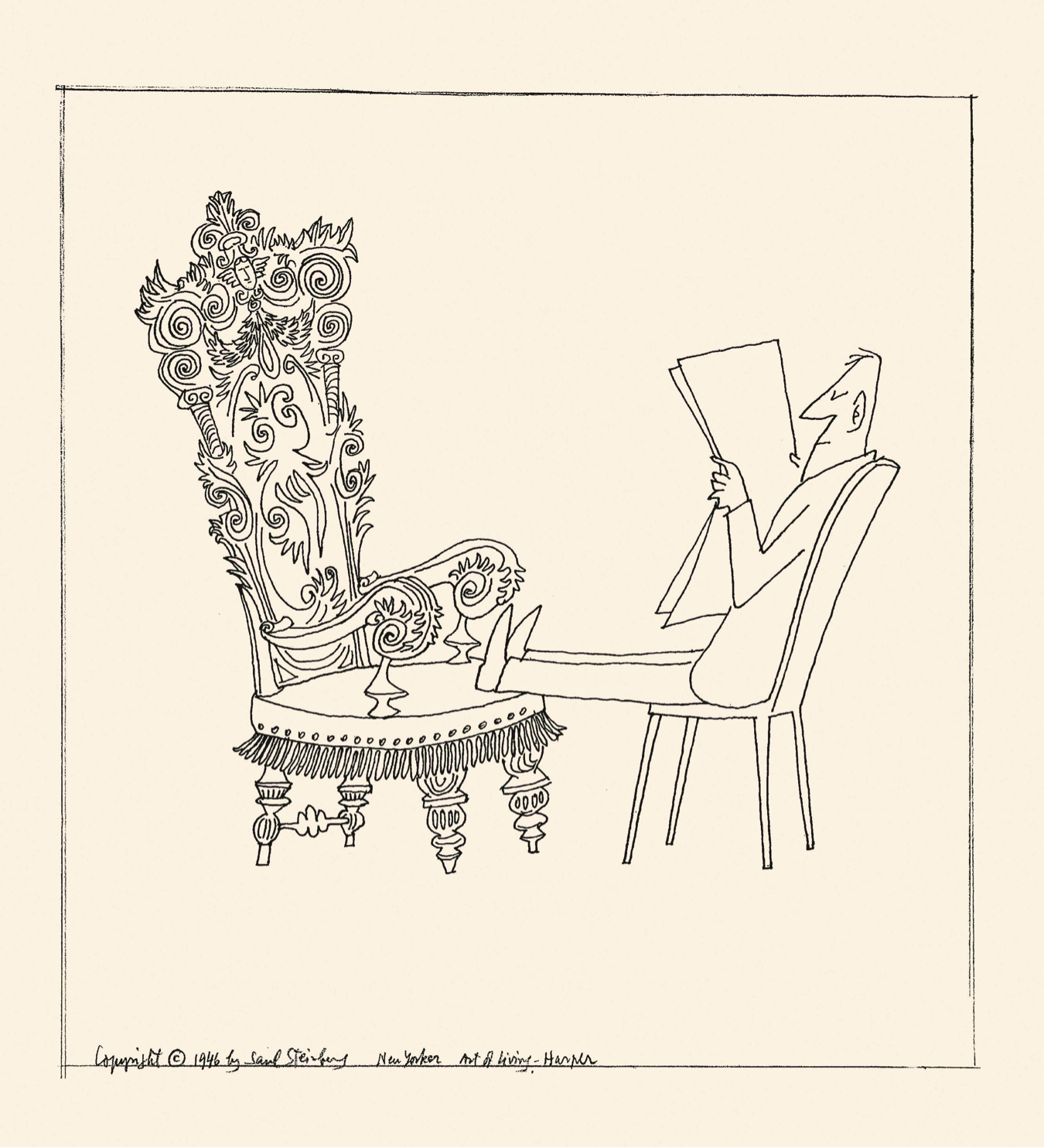
You wouldn’t use the juicer to juice anymore than you would want to linger on this chair.  That’s not what they’re about.  Like so much modern design, they’re to be admired, not used.

But in a pinch, uses can be found:

Image

Saul Steinberg, Feet on Chair, 1946 Ink over pencil on paper, 9 7/8 x 9 ¼ in.

Private collection ©  permission of The Saul Steinberg Foundation/Artists Rights Society (ARS), New York

Changes: Small, Big, and Mammoth

Cities change.

Sometimes it’s incremental and happens in just a few years:

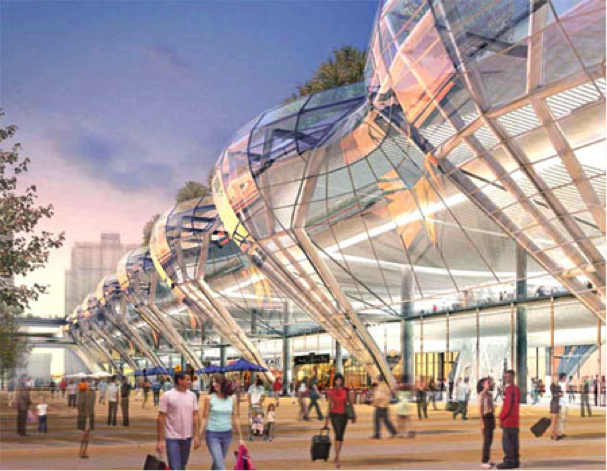
This was the Transbay Terminal, at First and Mission Streets,  up to last year, San Francisco’s hub of trains and buses at one time:

Soon, it will look like this.

And coming across Mission Street:

61 stories

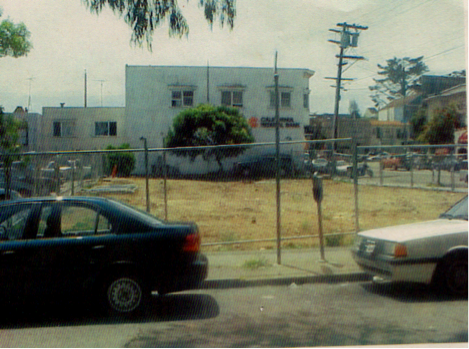
This empty lot in San Francisco’s Glen Park neighborhood

Became this:

(I was the developer of this project, a combination grocery store, public library and housing.)

In 2016, this:

will become this:

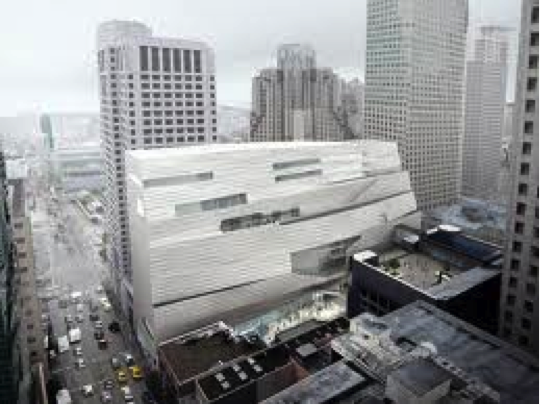
San Francisco Museum of Modern Art expansion

The changes can take centuries.

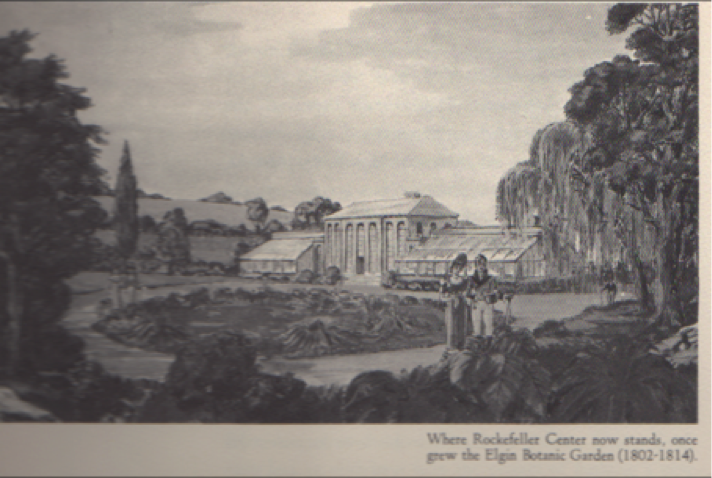
This bucolic scene:

1802 – 1814

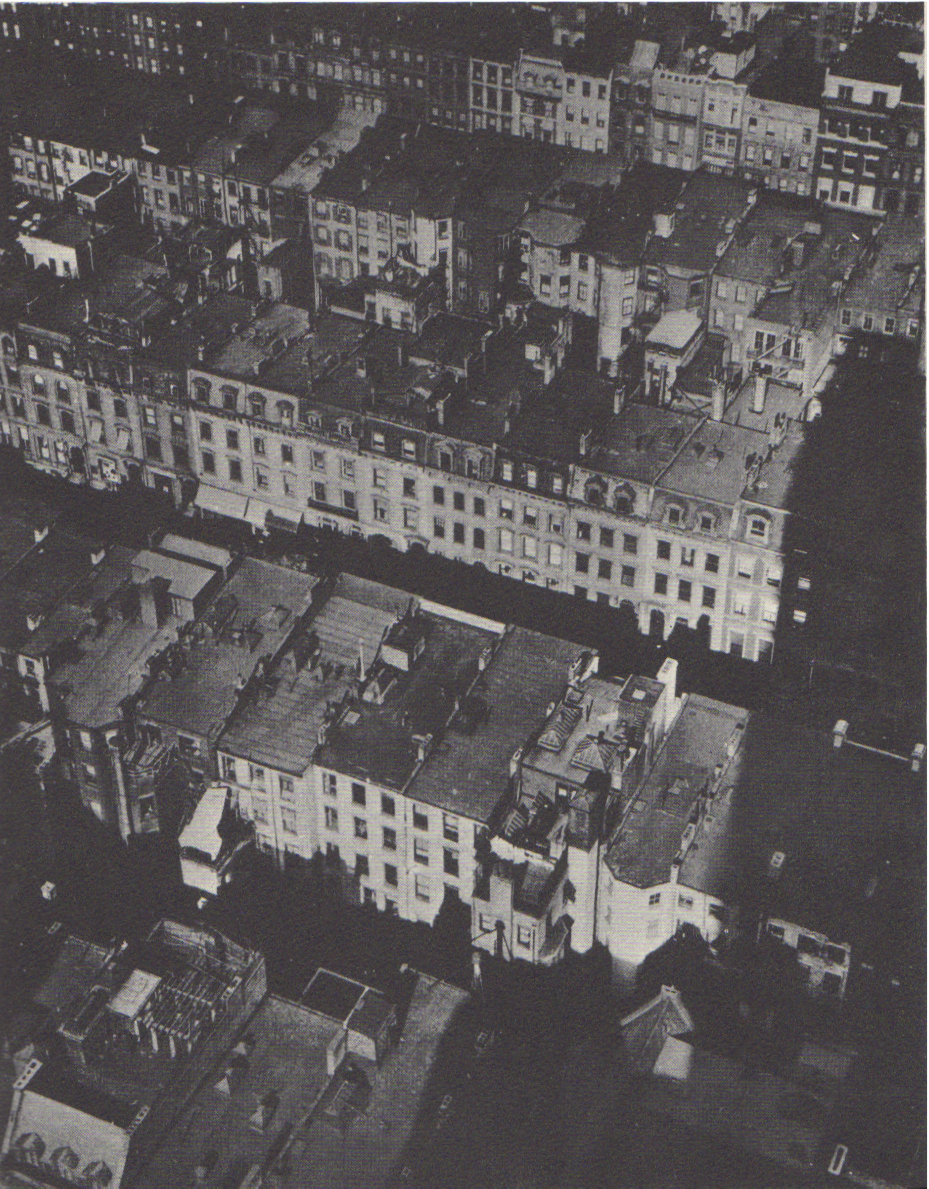
became this:

and wound up like this:

Rockefeller Center

In 1816,this was the scene at 16th and Dolores in the Mission, about 5 blocks from my apartment:

These changes are no big deal.

This year, on the site of the Transbay Terminal, a backhoe unearthed an 11,000-year-old tooth of a Woolly Mammoth. Today, tech workers and secretaries graze here on their lunch hours, but then it was this guy:

We marvel at the changing city – the restaurants opening and closing, the skyline changing. 11,000 years from now what eyes will gaze at First and Mission, and what will they see?

Cities Destroyed

You read a lot about the creation of cities.  In my world that’s the work we do.  But let’s take a moment to reflect on the flip side: the destruction of cities.

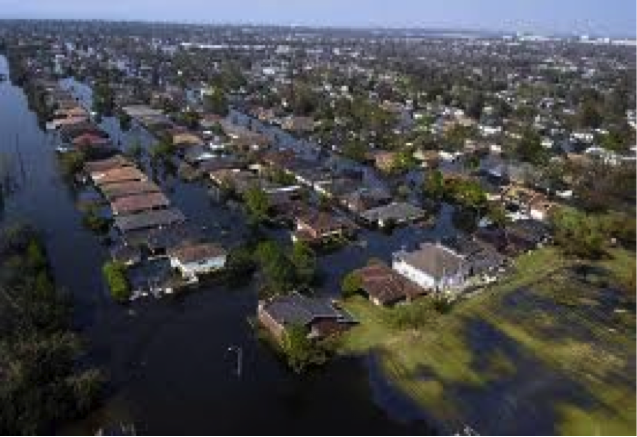
Sometimes it is nature.

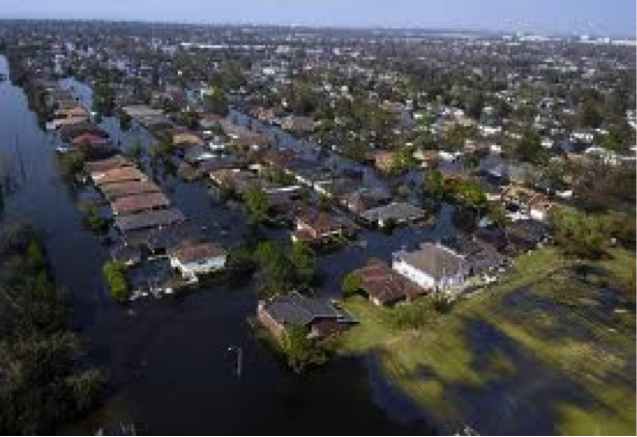
New Orleans

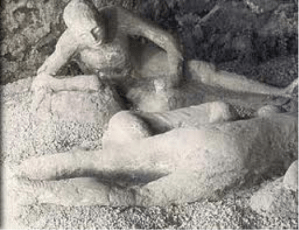
Pompeii, 79 CE
Or San Francisco in 1906:

“twenty years to build, twenty seconds to destroy”

There’s a 2:1 chance of a repeat in San Francisco in the next 25 years.  But we mostly ignore it.

Sometimes it’s something we do to each other:

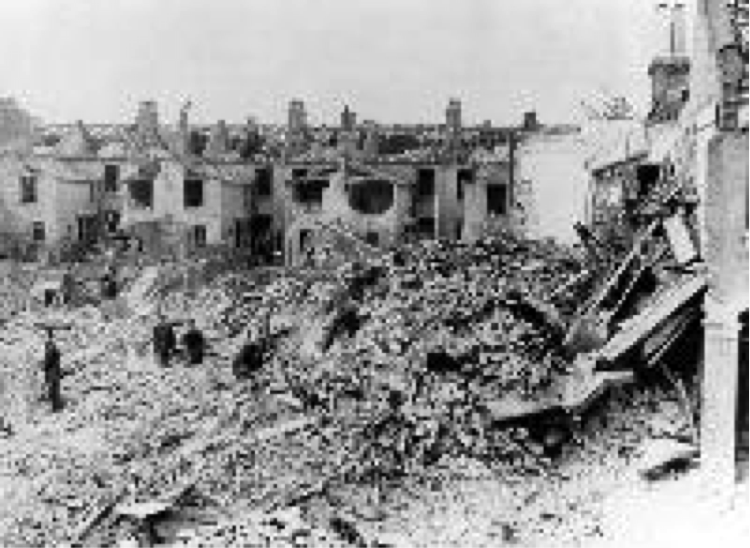
Like London during the Blitz

Or Nanking, Hiroshima, Beirut, Dresden, Guernica, Helsinki, Beijing, Bucharest, and Cologne.

In the Second World War, both the Allies and the Axis airforces bombed Bucharest.

Tel Aviv, Belgrade, Budapest, Stalingrad and Leningrad.  100,000 killed in one night in Tokyo.  Lovers and love letters alike, burnt.

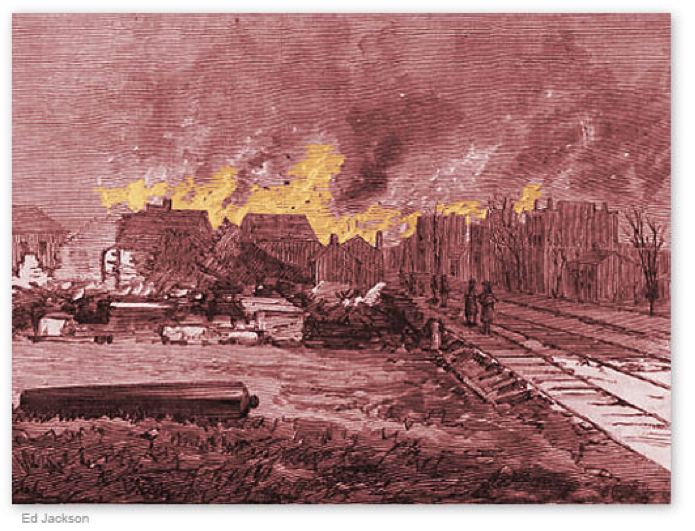
Even Atlanta.

Divine Intervention

To really slap down a city, there is nobody like God. Like the destruction of Sodom:

Or the Flood, which took out every city and town.

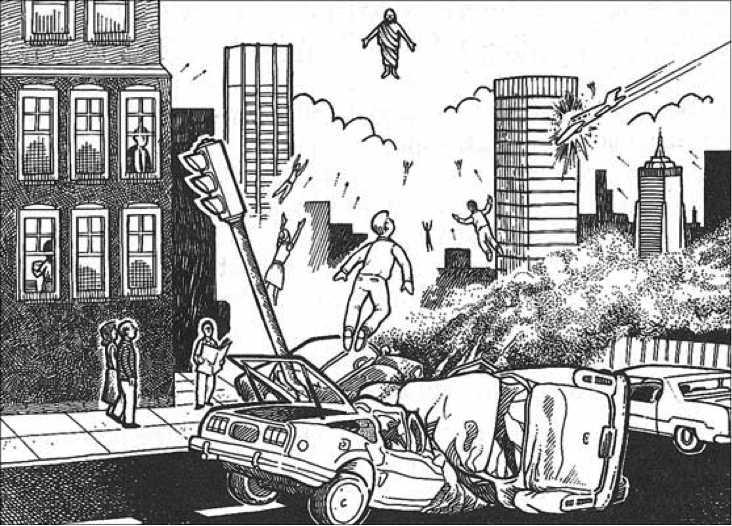
Many people look forward to the Rapture.

(also tough on cities)

Both Ronald Reagan and George W. Bush really thought this will happen.  So do all the evangelical Christians. It understandably makes it difficult to plan ahead. Which explains a lot.

Please take a moment to remember fallen cities.

SHINING A LIGHT ON FREDERICK J. KIESLER

If you’re looking for an architect you might be drawn to a Modernist or a Postmodernist or even a Brutalist.

But if you have in mind a Surrealist, Frederick Kiesler (1890 – 1965) is your man.


Kiesler isn’t very well known – his most famous work was an art gallery for Peggy Guggenheim, Art of This Century in NY (1942).


Also, he was Hedy Lamarr’s uncle.


Hedwig Eva Maria Kiesler

Surrealist architecture isn’t very practical, which many clients consider a shortcoming.

And Kiesler set a standard for impracticality.

“If Kiesler wants to hold two pieces of wood together, he pretends he’s never heard of nails or screws. He tests the tensile strengths of various metal alloys, experiments with different methods and shapes, and after six months comes up with a very expensive device that holds two pieces of wood together almost as well as a screw.”

Architectural Forum, 1947.

He was short on built projects (and short himself: under 5 feet, he said, “Genius and talent is hardly ever given to tall people”).

But he was huge on ideas, like these:

“Art can no longer live in mid-air nor architecture on the ground of business. That’s over.”

“Our Western world has been overrun by masses of art objects. What we really need is not more and more objects, but an objective.”

“Form does not follow function; function follows vision. Vision follows reality.”

And his unbuilt projects had beautifully poetic names:

The city in space

The endless theatre (shaped like an egg)

The endless house:


Space stage (1924)

City in Space (1925)

Horizontal Skyscraper (1925)

Endless Theatre Without a Stage and Four Dimensional Theatre (1926)

The Telemuseum (with walls designed as receiving screens for transmitted pictures – in 1927)

The Flying Desk (1930)

Nucleus House (1931)

Murals Without Walls (1936)

Vision Machine (“quasi-scientific, grandiose yet vague, ideogrammatic and poetic rather than diagrammatic”)(1937)

Mobile Home Library (1938)

Hall of Superstitions (1947)

Grotto for Meditation (in the shape of a dolphin, underground) (1962)

and Tooth House (1948).

His original drawing for Tooth House hangs in my office.


In his whole career, only one Kiesler building was built.

The Shrine of the Book (1965), it is in Jerusalem and houses the Dead Sea Scrolls.


Six months later, Frederick J. Kiesler was dead.


For more on Frederick J. Kiesler, you might consult Frequently Asked Questions About Frederick J. Kiesler.

UNREAL ESTATE: IMAGINARY CITIES

Some are lovable, like the Emerald City of Oz, where you can get cleaned up after a rough road trip:


 Then there are the cities which are better off as dreams – because in real life they would be nightmares. In particular, I think of the garden cities of Le Corbusier:

And then those dreamt cities which, tragically, got built:


Brasilia, the dream of Oscar Niemeyer


Albany, New York, Nelson Rockefeller


The Bronx, Robert Moses

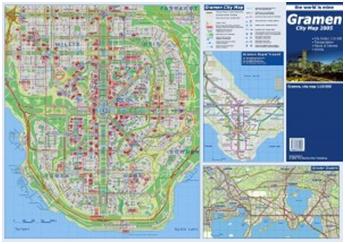
 There are people who map imaginary cities such as these of Gramen, the capital of the equally imaginary Scania.


In the San Francisco Public Library’s online card catalogue, there are 17,455 listings that begin “City of…” including:

        City of Vice, of Ice, of Rocks, of Dust, and Ash.

 City of Dreams, of Dreadful Nights, of Dragons, of Angels, of Fallen Angels.

 Of Scoundrels, Rogues and Schnorrers, of Bad Men, of Lost Girls, and Lost Souls.

 Of Promise, of Secrets, of Whispers, of Wind, of Glass and a City of Fire.

 There’s a City of God and one of the Dead. All the way to the Lost City of Z.

Better yet, the cities in Italo Calvino’s Invisible Cities from 1972 in which Marco Polo tells Kublai Khan of his visits to these cities (among others):

City Notable for
Despina Different cities if approached by land or sea
Phyllis Only the part you see at any one time exists
Moriana Behind what you see is “rusting sheetmetal, sackcloth, planks bristling with spikes…”
Octavia Built on a net over a chasm like a spiderweb
Eusapia The dead are placed in an identical city, beneath the living one

And then with the mythical city of Zobeide, Calvino comes closest to home. “They tell this tale of its foundation; men of various nations had an identical dream… and they decided to build a city like the one in the dream. The city’s streets were streets where they went to work every day, with no link any more to the dream.

Which, for that matter, had long been forgotten.”


Ad Hoc Monuments

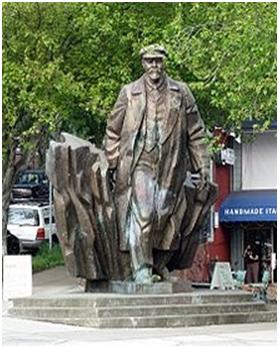
Every town is cluttered with statues of the departed. Could be Garibaldi or Mao, Jefferson or Lenin.


Ancient or Modern, they’re dead. And they’re so heroic we hardly notice them. We can’t touch them and they don’t touch us.

But there is another kind of memorial, the ones made by ordinary people to honor ordinary people and they have a power the monuments don’t.


Here’s one from Bedford Stuyvesant in Brooklyn.


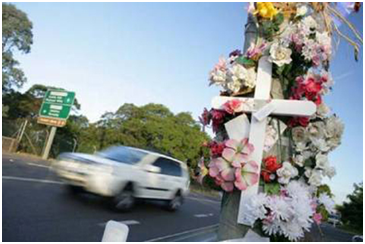
Sometimes they whiz by the car, sites where someone got hit.


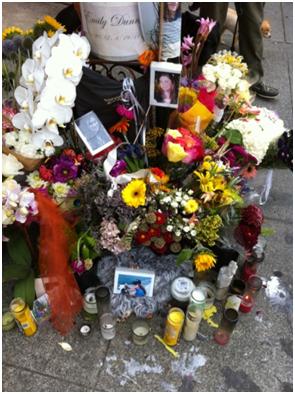
On my block, a 23-year old girl named Emily Dunn was hit by a bus and killed and this memorial grew and then, itself, died.

This went up a few weeks ago in a doorway a block away:


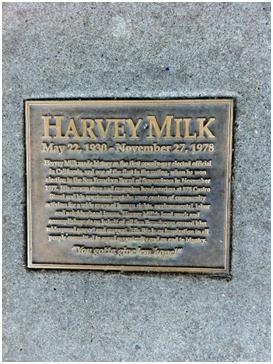
Right across the street there is this plaque in the sidewalk in front of Harvey Milk’s former camera store. It not only memorializes him, it also contains him, or at least his ashes.


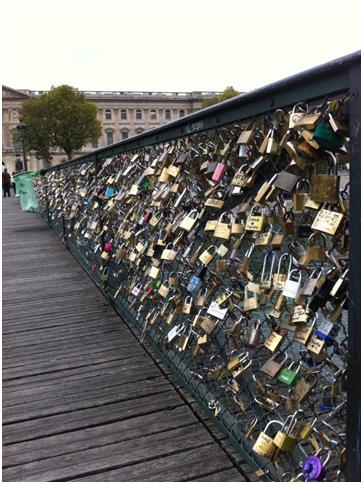
But what of love? Death gets its statues but love we mark on our own. Here, on a bridge over the Seine, sweethearts lock padlocks to mark their affection.


Without any permits or committees or hearings or plans, in the cracks, our feelings.


This House is Blue in France.

This house is blue in France.

There is a parallel San Francisco for the French – romantic and imaginary, it’s the San Francisco of the 1970’s.

French tourists come looking for it, with their kids, even in the Castro (where American families just don’t come). It exists in what the French call “le Far West”, where everyone is free.

In 1973, Maxime Leforestier had a big hit in France with the song San Francisco. It begins:

    It’s a blue house

    Perched on a hill.

The song continues: One throws away the key, everyone’s there, it swims in the fog, Tom plays the guitar and we roll on the grass. It’s a blue house, you go there on foot, the people who live there have thrown away the key, people with long hair, people of light, mad people.


M. Leforestier, in a recent interview:

Fuyant toute autorité, loin des préjugés dont ils se sentent victimes, des hippies, des homosexuels et des insoumis qui refusent de partir au Vietnam vivent ensemble en bonne intelligence, en toute liberté surtout.”

Fleeing all authority, far from the prejudices against them, the hippies, homosexuals, and the rebels who refused to take part in Vietnam live together happily and above all free.

“Tout le monde etait amoureux et libre”: Everyone was in love and free.

You can make a trip to this French version of San Francisco at youtube.

This house, la maison bleue, is the symbol of a lost world, un Age d’Or which never was. But that doesn’t make it any less real. Certainly, it’s a world as real as our imaginary Paris in the ’20s, its counterpart on the fictional map.

The Blue House is real – it’s at 3841 18th Street, but it’s even more solid in imagination.

Until recently it was green. The French magazine Nouvelle Observateur took it hard: Sacrilège: La maison bleue de Maxime Le Forestier est verte! According to the author it would be as if the Taj Mahal were painted cherry red.


But with the contribution of a French paint company and the participation of the French Consulate, the house is, once again, bleue.

If only we could bring up the lost times, conjure up lost youth, with a coat of paint!


Human Resources

There’s a lot to see where I work, at Market Street between 2nd Street and New Montgomery.

I even wrote about this block on an earlier post: a private eye said it’s the perfect place to lose a tail because there’s so much action.


Thousands of people pass by in an hour – like Frank Chu, who orbits Market Street with his crazy signs. And tons of office workers, tourists, art students, deliverers, and panhandlers.  Some strutting and some shuffling.

I’m down there all the time but just last week I realized that the most important landmarks on the block aren’t the heroic statue or the Hobart Building. They are the Guardian and the Concierge.  Every day, they’re there like bookends, the Guardian on one corner and the Concierge on the other. Without them the block would seem empty, like a party before the guests arrive or a nightclub during the day.

The Guardian.

When the Bank of America is open he stands by the door.   I wouldn’t even think of robbing this branch. I’m even afraid to speak to him, with his gun and his sunglasses. 

The Concierge

For the eight years I’ve had an office on this corner, he’s been in front every day.  On good days he shines shoes and on rainy days he sells umbrellas.  At least four times every weekday he’s tried to shame me into a shine – even when I’ve worn brand new shoes.  That’s over 7,000 times I’ve heard “Where’s the pride!?” and “We gotta do something about those shoes, Slim!”  But I never wanted to sit, like a potentate on Market Street, while getting my shoes shined.

Until last week. He gestured me onto an old movie theatre seat. We introduced ourselves after thousands of days of shoeshine offers and shrugs.

22 years he’s been on the corner, far longer than any of the stores or banks. They come and go but John (that’s his name) has been steady. He anchors the block. Most of his patrons have been coming regularly for years themselves, men mostly, catching up and getting shined. Watching the block change and the world go by.

It’s a great corner: it’s got a subway stop and a flower stand and a heroic statue. It’s got a mix of old buildings and new ones. Historic streetcars run by.

Plus, now, every morning I get greeted on arrival; “Hey Dave how’s it goin’?” and greet John back by name, too. The ice has been broken.

When streets get planned and planted and buildings get designed and built it’s easy to forget the pleasure of a welcome. The importance of recognizing where we are and of being recognized back. Of belonging.

This human touch: you can’t buy it or rent it, design it or build it, or fake it. But it you can feel it.